Before Module One
The Skill Nobody Names
Every chief of staff, executive assistant, and right hand I have ever worked beside has already mastered the tool. They can run the calendar, build the deck, chase the signature, close the loop. That is not in question by the time someone is good enough to be in this room. What is in question, almost always, is the other thing: the thing that never appears on a job description because it cannot be reduced to a task.
Getting tasks done is a tool. Knowing how to maneuver (when to speak, when to hold, whose room you are actually in, what the exec needs versus what they asked for) is the skill. Tools are teachable in an afternoon. The skill takes longer, because it is not procedural. It is diagnostic. It requires you to read a room before you act in it, and to know which seat you are sitting in before you decide what your seat is for.
This is the difference this Notebook exists to close. Every issue works the same two ways at once: it sharpens your read of the room you are actually in, and it hands you the specific moves, the briefings, the translations, the recommendations, that only make sense once you can see clearly. Issue One does both, starting with your own diagnostic.
You already have the tool. This is where you learn the maneuver.
Your Diagnostic
The Seat at the Table
Every command seat carries a built-in strength and a built-in blind spot, not a personality flaw but a structural one. The strength is what got you the seat. The weakness is what the seat does to you if you stop watching for it. Before you can maneuver a room, you need an honest read of your own seat: which one you actually hold, what it hands you for free, and what it will quietly cost you if you let it run unchecked.






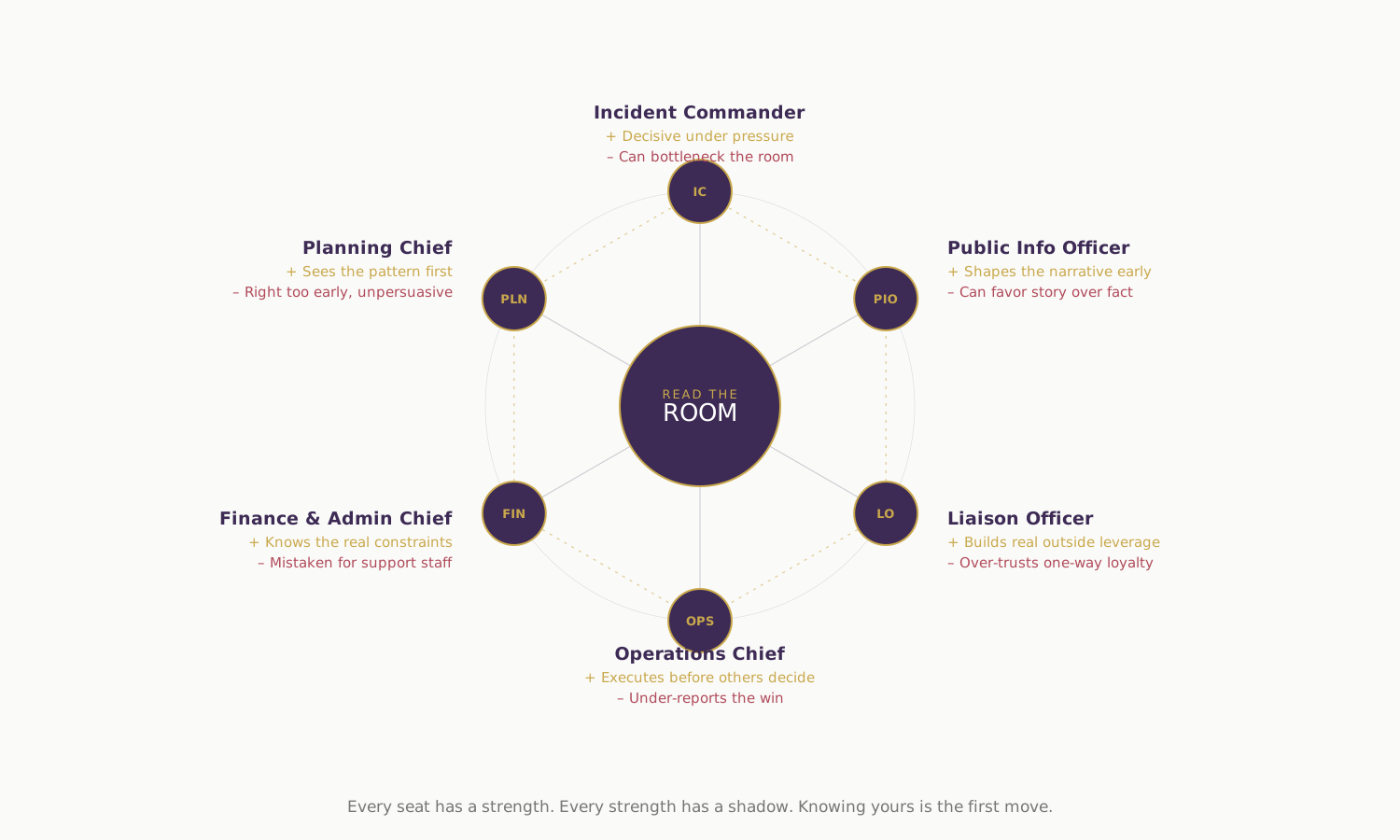
If you have not yet taken the two-minute Seat at the Table quiz, that is the fastest way in. It will tell you which of the six seats you default to under pressure. The table below is the full reference: your seat, your leverage, your shadow, and the single growth move that keeps the shadow from running the room for you.
| Seat | Strength | Weakness | Growth Move |
|---|---|---|---|
| Incident Commander | + Decisive under pressure | – Can bottleneck the room | Delegate the decision, not just the task. |
| Public Information Officer | + Shapes the narrative early | – Can favor story over fact | Fact-check yourself before anyone else has to. |
| Liaison Officer | + Builds real outside leverage | – Over-trusts one-way loyalty | Audit who actually owes you, versus who you've simply been generous to. |
| Operations Chief | + Executes before others decide | – Under-reports the win | Narrate the win out loud, in the room, before someone else claims it. |
| Finance & Admin Chief | + Knows the real constraints | – Mistaken for support staff | Speak in outcomes, not overhead, in every room that matters. |
| Planning Chief | + Sees the pattern first | – Right too early, unpersuasive | Hold the call. Wait for the room to be ready to hear it. |
Every seat has a strength. Every strength has a shadow. Knowing yours is the first move. The four modules that follow are how you act on it.
The Notebook: What You Get
The Curriculum
The Notebook is issued monthly. Each issue stands alone and builds on the last. Issue One lays the foundation: your seat, and the four core maneuvers every seat has to learn regardless of which one you hold.
Every Issue Includes
- One core lesson, written the way this one is, real instruction, not a slide summary.
- A named exercise you do that week, not “food for thought.”
- A template or worksheet you can reuse on the actual job, not just in the reading.
- A short diagnostic or reflection tying the lesson back to your seat at the table.
Issue One Specifically: The Four Modules
These four modules are sequenced on purpose. Presence comes first because nothing else lands without it. Understanding the exec's real definition of success comes second because it is the lens the other two modules are read through. Briefing is the delivery mechanism. Recommending action is the actual job. It is the reason you are in the room at all.
- Executive Presence: what presence actually is, and what your seat does to it under pressure.
- Understanding What Success Means to the Exec: the ask versus the actual need.
- Briefing the C-Suite: turning the four moves into a three-minute brief.
- How to Determine What Actions You Suggest: the discipline of recommending, not just reporting.
Module One
Executive Presence
Presence is not performance. It is the seat you hold before you say a word.
The Concept
Most people are taught that executive presence means confidence: stand up straight, speak slowly, don't fidget. That is theater, and rooms at this level can tell the difference between theater and command within about ninety seconds. Real presence is not something you perform. It is a byproduct of already knowing which seat you're sitting in, and sitting in it without apology.
Read the Room, the first of the four moves, is the prerequisite to presence, not a separate skill. You cannot carry a room you have not first read. Before you speak in any high-stakes meeting, you already know: who has the actual authority in this room versus the titled authority, what the temperature is before you walked in, and what outcome the room needs from you specifically, not generically.
Presence also breaks in seat-specific ways. Review the wheel: an Incident Commander's presence curdles into bottlenecking: the room waits on you because you have made yourself the only valid decision point. A Public Information Officer's presence curdles into narrative that outruns the facts. A Planning Chief's presence reads as absence, because being right too early looks like having nothing to say. Presence is not one universal posture. It is your seat's strength, deployed on purpose, with your seat's weakness actively watched.
The Move
Before you walk into the next room that matters, name three things on paper: which seat you are sitting in for this specific meeting (it can shift by meeting), what that seat's shadow will try to do to you today, and the one sentence you are prepared to say if the room goes silent and looks to you. That sentence is your presence. Everything else is posture.
Before your next high-stakes meeting, complete this in writing, not in your head.
Module Two
Understanding What Success Means to the Exec
The task is what they asked for. Success is what the task frees them to do next.
The Concept
The single most common failure at this level is not incompetence. It is answering the literal ask instead of the actual need. An executive asks for a slide deck. What they need is to walk into their board meeting looking like the one person in the room who saw the risk coming. The deck is the tool. Looking prepared in front of the board is the success condition, and it is never written on the request.
This is where RACI stops being a project-management artifact and becomes a diagnostic instrument. Ask, for every task you're handed: who is Accountable for this once it's done, not who assigned it, but who owns the outcome in front of their own boss or board? What does success look like specifically to that Accountable person, in their world, under their pressure? Once you can answer that, the deliverable itself becomes almost mechanical. Most of the maneuvering skill lives in this translation step, not in the execution that follows it.
Success, at this level, is rarely “the task got done.” It is more often one of a small set of underlying conditions: the exec's time or political capital gets protected, a risk gets closed before it becomes visible to someone above them, or the exec is made to look, to the room that matters to them, like they were already three steps ahead. Learn to hear which of these is actually in play before you start building anything.
The Move
Every time you receive an assignment, do not start with the deliverable. Start by writing, in one sentence, what you believe the Accountable person needs to look like or feel like once this is done, and to whom. If you cannot answer that sentence, you do not yet understand the assignment well enough to do it well, no matter how good the execution is.
Take the last three tasks you were assigned. For each one, write two lines.
Where the two lines don't match, that is the gap that has been costing you credit for work you already did well.
Module Three
Briefing the C-Suite
A briefing is not a report. It is a maneuver. You are moving them to a decision, not downloading information.
The Concept
A report transfers information. A briefing moves a decision-maker from where they are to where they need to be, in the shortest possible distance, without losing them along the way. Executives at this level are not short on information. They are short on time and short on people who will tell them the actual shape of a problem without softening it into noise. The briefing is where the four moves stop being a private framework and become a spoken structure.
Read the Room opens the brief. In one line, you tell them what the temperature is before you say anything else, so they know how to receive what comes next. Take Your Seat is where you state your position, not just the data. You are not a narrator, you have a read, and the room needs to hear it stated plainly. Off Plumb is the moment you name the risk or the tension directly, without euphemism, because burying it is the single fastest way to lose an executive's trust permanently. The Walk Back is the close: the recommended path back to center, stated as a specific next action, not a menu of possibilities left for them to sort through.
The best executive briefings run under three minutes and survive being interrupted at any point, because the structure itself carries the logic. You are never dependent on finishing a sentence to have already delivered the point.
The Move
Structure every briefing in this order, out loud, before you ever put it in writing: temperature, position, risk named plainly, recommended path back to center. If you can say all four in under three minutes without notes, you are ready to write the deck. If you can't, you don't yet have a briefing. You have research.
Take one real, currently open issue. Draft a spoken briefing using the four-move structure.
Read it aloud and time it. If it runs over three minutes, the cut is almost always in step two. You are over-explaining your position instead of simply stating it.
Module Four
How to Determine What Actions You Suggest
Getting tasks done is a tool. Knowing how to maneuver, and to recommend, is the skill. This is where that skill becomes visible.
The Concept
This is the module the other three exist to serve. Recommending action, not just surfacing information, is the actual job at this level, and it is the thing most people in support roles are quietly never taught, because it feels presumptuous to claim. It is not presumptuous. It is the entire value of the seat.
A recommendation is built from the other three modules, in order. Your presence is what lets you say it without flinching. Your read of what success means to the exec is what makes the recommendation actually useful instead of merely correct. Your briefing structure is how it gets delivered without getting lost. What remains is the discipline of forming the recommendation itself, and here, again, your seat's shadow is working against you specifically. An Operations Chief under-reports the win and hedges the recommendation into vagueness. A Finance & Admin Chief gets read as support staff and holds back a recommendation that was actually the sharpest one in the room. A Planning Chief sees the right call early and phrases it so far ahead of the room that no one can act on it yet.
The discipline that solves for all six shadows at once is the same: never bring a decision-maker an open question when you can bring them two options and a lean. “What do you want to do” outsources the job back to them. “Here are the two real paths, and here is the one I'd take and why” is the actual service you are there to provide. You can be overruled. You cannot be skipped.
The Move
Before you're asked “what do you think we should do,” have already answered it in writing: two viable options, stated fairly, and a committed lean with your reason. Calibrate the lean to what you learned in Module Two: the option you recommend should be the one that actually serves what success means to this specific exec, not the one that is safest for you to suggest.
Pick one open decision currently sitting on your desk or your exec's. Before it's raised in conversation, write:
Bring the lean into the room, stated with the presence of Module One and the structure of Module Three. Notice what happens when you stop asking the question back.
A Reusable Tool
The RACI Matrix, Inside the Plumb Line
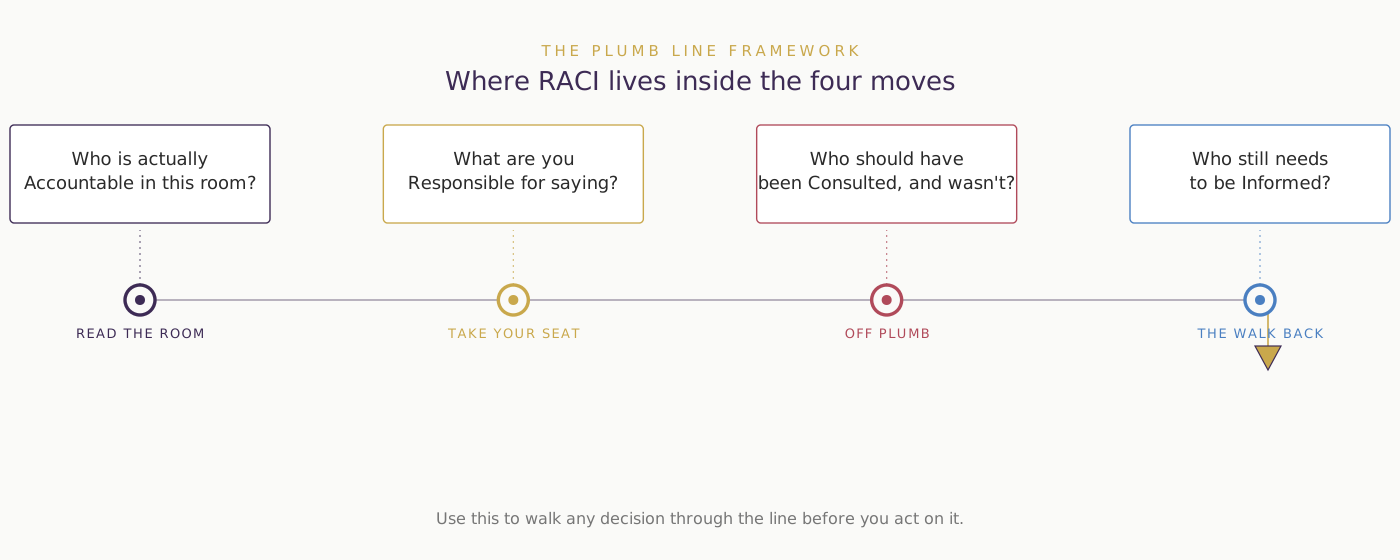
This is the tool underneath every module in this issue. Print it, save it, run any live decision through it before you act. The four moves on the left tell you where you are in the room. The RACI question beside each move tells you exactly what to check before you move to the next one.
Blank Working Copy
Use this table for the actual decision in front of you. Name the task or decision in the first column, then fill in a name against each RACI role. An empty box is the fastest way to catch a role nobody has actually claimed.
| Decision or Task | R | A | C | I |
|---|
Keep a fresh copy of this page for every meeting that matters. A pattern across five or six filled-in copies will tell you more about the room you're actually operating in than any single meeting will.
Closing Issue One
How to Use This Notebook
Work these four modules in order, one at a time, not all in one sitting. Each exercise is designed to be run against a real meeting, a real assignment, a real decision, not a hypothetical. The Notebook is not a reading habit. It is a working file.
Issue Two builds forward from here. Keep your Seat Check, your Translation Drill, your Three-Minute Brief, and your Lean. They are the raw material the next issue will ask you to revisit, and the fastest way to see how much your read of the room has already sharpened.
You already carry the weight of the seat. This is how you carry it with purpose.